Copyright © Creativity Unleashed Limited 2009.
www.brianclegg.net
HOME.Books.Xenostorm.Services.Talks.Meet Brian.
Arranging an event or school visit
Public Events


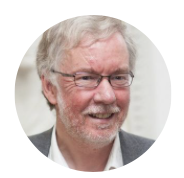
Brian is available to give a range of talks aimed both at school children and adults with an interest in science. He has given these at schools, Cafe Scientifiques, science festivals, the Royal Institution and Science Museum Dana Centre in London. Brian also runs corporate training events on creativity and Ecologic (ensuring your CSR/environmental approach doesn’t just look good, but really delivers) - see www.cul.co.uk for details.


Costs


Pricing is £160 for a one hour talk plus questions (£200 if in the evening), £240 for a half day or £350 for a full day. Travel expenses extra.


Talks - all ages from reception to adult


WRITE NOW – What does it take to make a book? What does being an author involve? A highly interactive range of workshops for all ages from a short session for Key Stage 1 to a half day or full day for sixth forms. These events explore what is involved in being a writer from obtaining the first idea to producing and distributing the book and making translations. There’s lots of activity and inspiration along the way.


Talks - Key Stage 2


HOW DOES LIGHT WORK? This lively session starts by stressing that light's much more than what we see with - it's what keeps us warm, gives us oxygen to breathe, and even fills our bodies in invisible webs of light. This leads on to discovering just what light is, and how it's different from anything else we experience.


HOW DOES STUFF WORK? Matter, from basic atoms to quantum theory. How, for example, we can sit on a chair when both the person and the chair are mostly empty space. Gets in lots of basic physics, but coming at it from unexpected directions.


HOW DOES THE UNIVERSE WORK? Where the universe came from, how we can possibly work that out, what's out there if you go far enough and why the aliens haven't come visiting yet. Cosmology always holds a fascination for a young audience.


Talks - Key Stage 3 and above/adult


ECOLOGIC - linked to my book Ecologic, this talk/discussion looks at how our attitude to green issues from recycling and carbon footprints to Fairtrade and organic food tend to be influenced more by emotion than by logic. The talk provides students with a toolkit to take a more realistic, less black-and-white view of the environment.


WHO INVENTED SCIENCE? - based on my book The First Scientist and a debate I devised for the Royal Institution, this is an exploration of what science is. The talk hangs on key people who might be considered to be the first scientist - people like Archimedes, Roger Bacon, Leonardo da Vinci, Galileo and even Maxwell. But apart from giving some entertaining insights into these key characters in the development of science it's also an opportunity to explore the nature of science and why we do it. Optionally we can have a vote at the end to see who the audience believe was the first scientist.


LIGHT YEARS - A historical journey from ancient times to the present day of that most amazing phenomenon, light. From the bizarre ideas of the ancient Greeks that light streamed from our eyes to modern experiments where light has been pushed past its own speed, and so backwards in time, or slowed to a stop, it's a fascinating subject. Packed with amazing aspects of light from its incredibly fast speed, unchanged by relativity to the way the very atoms of our body are held together by an invisible web of light.


BEFORE THE BIG BANG - Based on Brian's new book about the origins of the universe and what came before it, this talk gives the audience a chance to explore the most popular question asked of the British Science Association - what came before the Big Bang. The event starts with the creation myths and explores how we first began to realize the scale of the universe. From there we see how the Big Bang theory came into being and how it isn't quite as certain as it is often portrayed, looking at the best of the current alternative theories. As the title suggest, we also consider that perennial question, if there was a Big Bang, what came before it... and discover that the answer could be nothing at all.


THE SCIENCE THEY DIDN'T TEACH YOU IN SCHOOL - science in school sometimes seems to miss all the best bits. Pick any one from this set of talks, which includes key aspects of modern science and the science you need to make sense of the news headlines:


MEMORIES - most of us struggle with memory. But in this fun, interactive talk there's a chance to learn a little about how memory works and try out some practical techniques that will help you remember people's names, numbers and lists of information. It's a talk you can't fail to remember.


STUDYING USING THE WEB - Anyone can type a few keywords into a search engine and slavishly copy out the results. Based on Brian's book Studying Using the Web, this interactive session demonstrates how to find the right material, check its authenticity, transform it into your own original work and keep up-to-date on essential topics.


STUDYING CREATIVELY - Good ideas are essential for any student who wants to do well. This invaluable workshop gives you the tools you need to work creatively, and shows that creativity isn't just about getting good results, it's fun and gives you a real buzz.


Talks - Key Stage 4 and above/adult


A BRIEF HISTORY OF INFINITY - Where did the idea of infinity come from? Who were the people who defined and refined this paradoxical quantity? Why is infinity, a concept we can never experience or truly grasp, at the heart of science? How can some infinities be bigger than others? An exploration of the most mind-boggling feature of maths and physics, this talk examines amazing paradoxes and the people who devised and refined the concept.


FASTER THAN LIGHT - "Nothing can travel faster than light" is central to relativity. But is it true? This mind bending session looks at experiments that sent signals past the light barrier and the remarkable instantaneous linkage that emerges from quantum entanglement. From there we see why sending a message faster than light has such significance, discovering how it would enable us to send a message backwards in time. Finally we come back to earth with the realities that limit the practical applications of these superluminal links. Explores mind bending science, finding out more about light, quantum theory and relativity into the bargain.


THE MAN WHO STOPPED TIME - Eadweard Muybridge was an eccentric Victorian photographer who produced the first high speed motion photographs, analysed the movement of animals and humans, devised the first motion picture projector and ran the first cinema. He travelled out from his birthplace of Kingston upon Thames to the wild world of 1870s California, where he murdered his wife's lover. It's a story packed with drama and fascinating technological developments.


Plus a 1 to 1.5 hour event specially designed for school teachers:


CREATIVITY IN THE CLASSROOM - an inspiring look at creativity techniques and exercises that can be used in the classroom, including an opportunity to assess why you want to bring creativity into the classroom and an introduction to the nature of creativity and how creativity techniques work.


Availability


For availability and further details, drop Brian an email at brian@brianclegg.net


17 March 2010 Brian is one of three speakers at An Evening of Fun Science at Burford School as part of the Oxfordshire Science Festival. Brian will be talking about using your brain better to enhance you memory, alongside Mad Science and Mike Leahy of Sky TV on dangerous creatures. Costs £4. The event runs 5.30 to 9pm (Brian’s on at 6.45). Call 01993 823303 to buy or reserve tickets.


20 April 2010 Brian will l be talking on Ecologic - the truth and lies of green issues at Nottingham Science Park at 5.30 for a 6pm start. The event is free, but pre-registration by 1 April is essential. Click here for details.


29 April 2010 Brian will be talking on Ecologic - the truth and lies of green issues at Moulton School in Northamptonshire at 7.30pm. entertaining talk provides the audience with a toolkit to take on greenwash and environmental bogeymen. To obtain your free tickets email lecturetickets@moultonschool.co.uk, stating the lecture name and how many tickets (up to 4). For more information phone 01604 641600.


1 June 2010 Brian will be talking on Ecologic - the truth and lies of green issues at Corsham Library, Wiltshire. Details to follow.


2 July 2010 Brian will be speaking on Who Was the First Scientist? at the Wrexham Science Festival. Details to follow.

Brian recently appeared in a lecture evening at Almere in the Netherlands. Click on his image below the main video window to see his talk on Ecologic and Eco-cities.